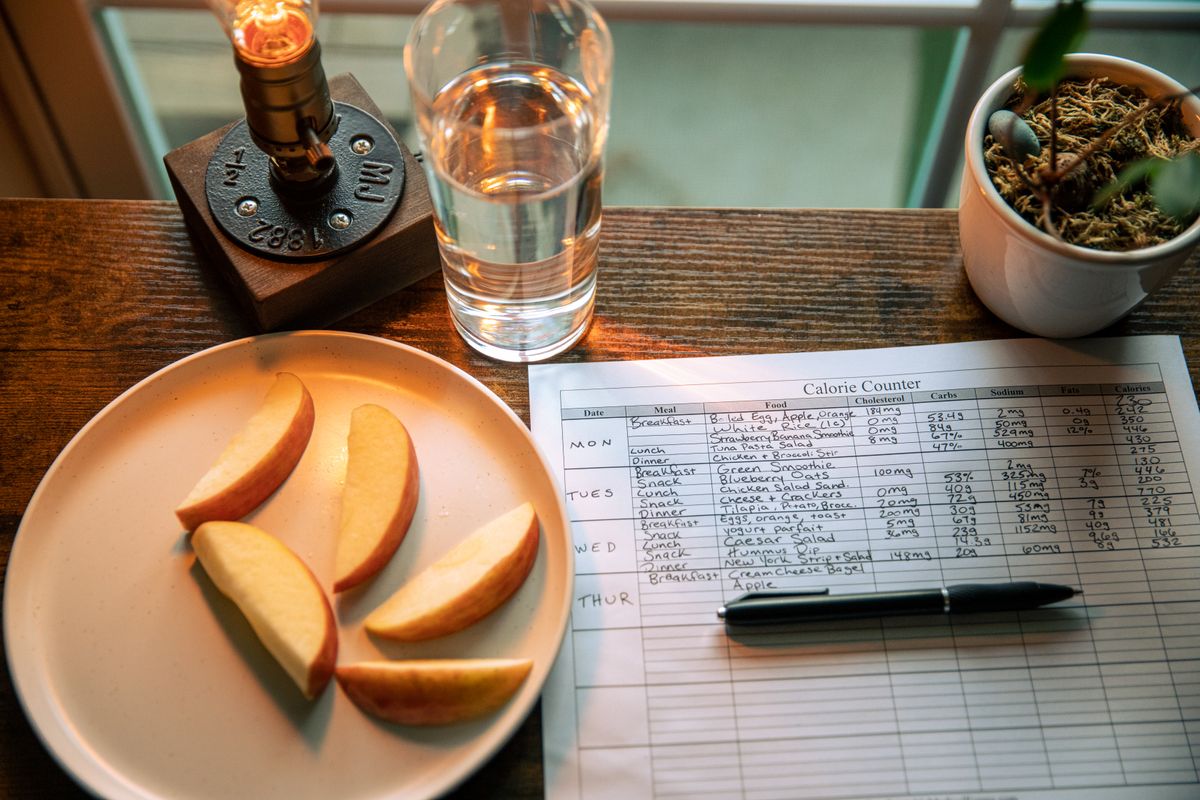
Short answer: kcal and Calories (capital C) are the same unit. One kcal equals one food Calorie. Whether your tracking app says "2000 Calories" or a European snack bag says "2000 kcal," those numbers are directly comparable — no math required.
To turn this into a practical daily target, pair this guide with Protein for Beginners: How Much You Need and Where to Get It.
In this article
The science in 60 seconds
The word "calorie" comes from thermodynamics. A small calorie (lowercase c, or "cal") is the amount of energy needed to raise the temperature of 1 gram of water by 1 degree Celsius. It's a tiny unit — useful in chemistry labs, not in your kitchen.
Because food contains enormous amounts of energy relative to this tiny unit, food scientists adopted the kilocalorie: 1 kcal = 1,000 small calories. A kilocalorie is the energy needed to raise 1 kilogram of water by 1°C. This became the standard unit for expressing food energy.
Now here's where the capitalization trick comes in. To avoid writing "kilocalorie" on every food label, scientists adopted a shorthand: a capital-C "Calorie" means kilocalorie. So:
1 Calorie (food label) = 1 kcal = 1,000 cal (scientific)
The capital C is doing all the work. "Calorie" on a label always means kilocalorie. The lowercase "calorie" is essentially never used in nutrition — it's a chemistry unit 1,000 times smaller.
The International System of Units (SI) actually prefers kilojoules (kJ) as the energy unit, which is why many countries require kJ on labels alongside kcal. But kcal remains the dominant unit in nutrition worldwide, especially in apps and popular media.
Why labels say both "kcal" and "Calories"
The terminology split comes down to which country printed the label:
- United States: The FDA requires food labels to list energy as "Calories" (capital C). By definition, this means kilocalories. You'll rarely see "kcal" on a US label — just "Calories."
- European Union: EU regulations require energy to be expressed in both kJ and kcal, listed in that order. So a European label might read "1,255 kJ / 300 kcal" per serving.
- United Kingdom: Post-Brexit, the UK maintained the EU format. You'll see "Energy 300 kcal / 1,255 kJ" on most British packaging.
- Australia & New Zealand: Energy must be listed in kJ. kcal is optional and often omitted entirely — which is why Australian labels can look confusingly high (a "600 kJ" snack sounds huge until you realize it's only ~143 kcal).
- Canada: Uses "Calories" like the US, meaning kcal.
Despite these regional differences, the underlying energy values are always identical. A 300 kcal serving in Germany is the same energy as a 300 Calorie serving in the US. There is no conversion needed when tracking across international labels — unless you're dealing with kJ (see the section below).
Label comparison table
Here's the same food shown as it would appear on labels from different countries, using a hypothetical snack with 250 kcal per serving:
| Label Origin | What It Shows | Example Value | Equivalent |
|---|---|---|---|
| 🇺🇸 United States | Calories (capital C) | 250 Calories | = 250 kcal |
| 🇩🇪 European Union | kJ / kcal | 1,046 kJ / 250 kcal | = 250 Calories |
| 🇬🇧 United Kingdom | kcal / kJ | 250 kcal / 1,046 kJ | = 250 Calories |
| 🇦🇺 Australia | kJ (kcal optional) | 1,046 kJ | = 250 kcal = 250 Calories |
| 🇨🇦 Canada | Calories | 250 Calories | = 250 kcal |
| Scientific | cal (small calorie) | 250,000 cal | = 250 kcal (never used on food labels) |
The key takeaway: every number in the "Calories" or "kcal" column is the same unit. The science column exists purely to illustrate why the capital-C convention was invented — writing 250,000 cal on a granola bar would help no one.
Does it matter for tracking?
For the vast majority of calorie trackers, the answer is no. Whether you scan a US label that says "180 Calories" or a UK label that says "180 kcal," both values go directly into your tracker without any adjustment. The numbers are the same.
Once the units are clear, the next question is how those calories are counted in the first place: our 4-4-9 rule explainer covers the arithmetic behind every label.
The one exception is if you encounter a label that shows only kJ (common in Australia and New Zealand). In that case, you need to convert:
Divide kJ by 4.184 to get kcal
Or use the rough shorthand: divide by 4.2. It's within 0.4% accuracy for everyday use.
630 ÷ 4.184 = 150.6 kcal — log as 151 kcal in your tracker.
Modern calorie tracking apps like Coach Ivy handle the kJ/kcal conversion automatically when you scan a barcode — the app reads the label data and stores it in kcal regardless of what unit the label uses. You only need to do manual conversion if you're typing values by hand from an Australian or NZ label.
Calories in kJ — the Australian/NZ label situation
Australia mandates that energy be listed in kilojoules because kJ is the SI unit for energy. The Australian dietary guidelines and nutrition panels all use kJ as the primary unit. For someone used to reading kcal labels, this creates a jarring mismatch — a "2,000 kJ" daily recommendation looks very different from a "2,000 kcal" recommendation (they're not the same: 2,000 kcal ≈ 8,368 kJ).
Here are the most common kJ ↔ kcal reference points for Australian labels:
| kJ on label | kcal equivalent | Calorie context |
|---|---|---|
| 400 kJ | 96 kcal | Light snack |
| 600 kJ | 143 kcal | Small snack |
| 840 kJ | 201 kcal | Moderate snack |
| 1,000 kJ | 239 kcal | Light meal component |
| 2,000 kJ | 478 kcal | Medium meal |
| 8,700 kJ | 2,079 kcal | Approx. daily adult energy requirement (AU guideline) |
The Australian "average adult" reference value is 8,700 kJ/day — that's approximately 2,079 kcal/day. Most international calorie targets (1,800–2,200 kcal/day for adults) fall in this same range, just expressed differently.
Common confusion cleared up
"My European label says 300 kcal but my US app says 300 Calories — do I need to double-check?"
No. 300 kcal = 300 Calories. Log the number exactly as-is. No math required.
"I've heard 1 calorie = 4 calories — how does that work?"
This is the kJ confusion. 1 kcal ≈ 4.184 kJ. Someone might loosely say "1 calorie equals 4 joule-calories" but that mixes units confusingly. The accurate statement: 1 kcal = 4.184 kJ. For food tracking, stick to kcal/Calories and you'll never need to think about this.
"The small calorie (cal) is important for understanding my diet."
Almost never. The small calorie appears in chemistry and physics contexts. In all of food science, nutrition, and fitness tracking, "calorie" means kilocalorie. When a dietitian says "eat 1,800 calories," they mean 1,800 kcal — not 1,800 tiny heat units that would barely warm a teaspoon of water.
Frequently asked questions
Is kcal the same as calories?
Yes. On every food label worldwide, 1 kcal equals 1 Calorie (with a capital C). When a US label says "200 Calories" and a European label says "200 kcal," they are describing the exact same amount of energy. No conversion is needed between kcal and food Calories.
What is the difference between kcal and calories?
In strict scientific terms, 1 kilocalorie (kcal) = 1,000 small calories (cal). A small calorie is the energy to heat 1 gram of water by 1°C; a kilocalorie heats 1 kilogram of water by 1°C. However, in everyday nutrition, "Calorie" (capital C) and "kcal" both refer to the kilocalorie. The lowercase small calorie is almost never used in food contexts — it would be impractically tiny to work with.
How many kcal are in a calorie?
Scientifically: 1 kcal = 1,000 cal (small calories). In food and nutrition: 1 kcal = 1 Calorie (capital C). So when a food shows 300 Calories on a US label, that is the same as 300 kcal on a European label — not 300,000 kcal. The capitalization convention exists precisely to avoid this confusion.
How do I convert kcal to kJ?
Multiply kcal by 4.184 to get kilojoules (kJ). To go the other way, divide kJ by 4.184 to get kcal. Quick mental shorthand: divide by 4.2. For example, 100 kcal = 418 kJ. Australian and New Zealand labels often list only kJ, so this conversion becomes useful when logging those foods manually.
Why do some labels show both kcal and kJ?
In Australia, New Zealand, and parts of Europe, food regulations require energy to be displayed in kilojoules (kJ) — the official SI unit for energy — either alongside or instead of kcal. The two units measure the same energy; 1 kcal = 4.184 kJ. Calorie tracking apps typically work in kcal or Calories, so if you're manually logging a food from an Australian label that shows only kJ, divide by 4.184 to get kcal.

Track your kcal with Coach Ivy — snap a photo and Ivy reads the label for you
Point your camera at any food label — US, EU, or Australian kJ — and Coach Ivy logs the calories automatically. No math, no conversions, no guessing.
Download Coach Ivy Free