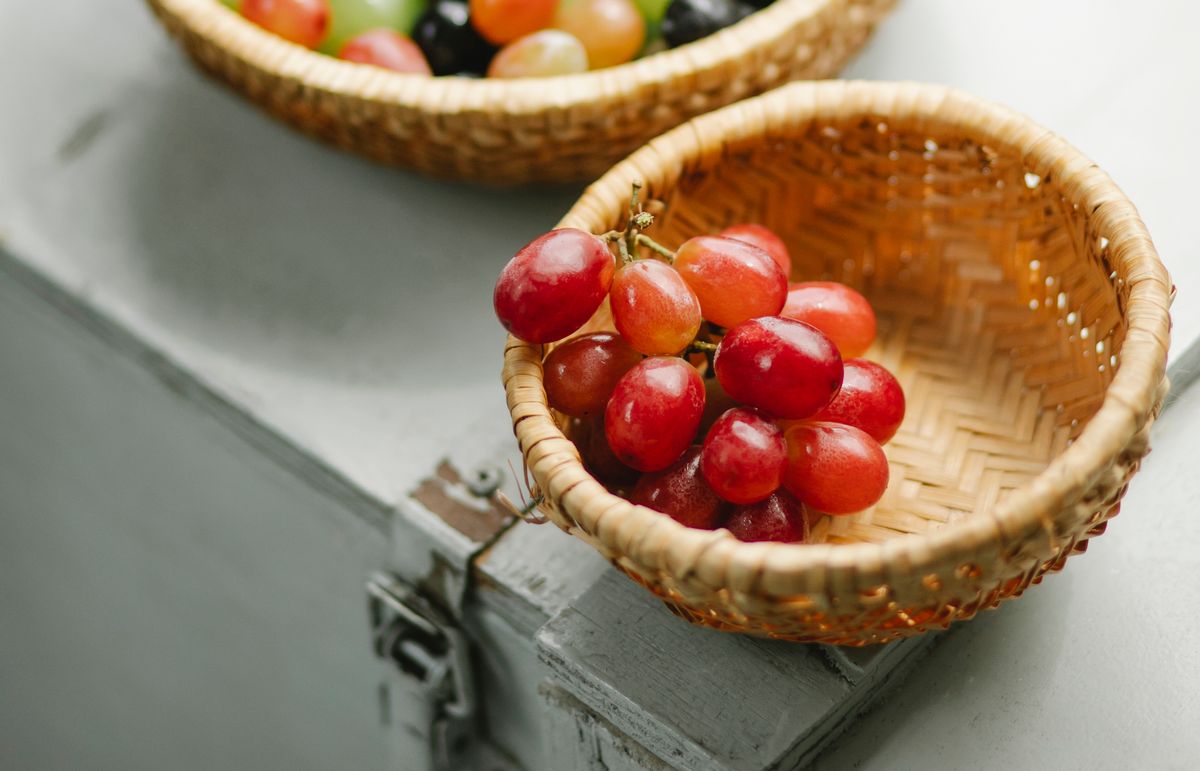
The quick version: 1 grape ≈ 3 kcal, 1 cup ≈ 62 kcal, 100g ≈ 69 kcal. Grapes are mostly water and natural sugar — zero fat, minimal protein. They're a smart snack in controlled portions, but the small size makes it easy to eat far more than you intended.
For more portion-aware calorie comparisons, see How Many Calories Are in Eggs? Every Preparation Method, Ranked and Calories in Boba Tea: What's Really in Your Cup.
In this article
Grape calories by serving size
Individual grapes vary in size from about 4g (small, like Champagne grapes) to 8g (large table grapes). The figures below use a standard average seedless table grape of ~5g each, which matches USDA reference values:
| Serving | Weight | Calories | Carbs | Sugar |
|---|---|---|---|---|
| 1 grape | ~5g | ~3 kcal | 0.9g | 0.8g |
| 5 grapes | ~25g | ~17 kcal | 4.4g | 3.8g |
| 10 grapes | ~50g | ~34 kcal | 8.7g | 7.6g |
| ½ cup (seedless) | ~46g | ~31 kcal | 8g | 7g |
| 1 cup (seedless) | 92g | 62 kcal | 16g | 14.4g |
| 2 cups (large snack bowl) | 184g | 127 kcal | 32g | 28.8g |
| 100g (label reference) | 100g | 69 kcal | 17.2g | 15.5g |
| 1 lb (bag / large bunch) | 454g | 313 kcal | 78g | 70g |
Red vs green vs black grapes — calorie comparison
All common grape varieties sit within a very narrow calorie range. The colour differences are primarily about anthocyanin content (the pigment that gives red and black grapes their colour) and slight variation in sugar composition — not meaningful calorie differences.
| Variety | Colour | Calories / 100g | Sugar / 100g | Notes |
|---|---|---|---|---|
| Thompson Seedless | Green | 67 kcal | 14.6g | Most common US green grape; mild, sweet |
| Red Globe / Crimson Seedless | Red | 69 kcal | 15.5g | Slightly higher sugar than green; rich flavour |
| Black Muscat / Autumn Royal | Black / Dark purple | 70 kcal | 15.8g | Deepest colour; earthy, musky sweetness |
| Concord | Deep purple | 67 kcal | 14.6g | Seeded; classic grape jam flavour; slightly lower sugar |
| Cotton Candy (large variety) | Green / pale | 72 kcal | 16.2g | Bred for very high sugar; slightly higher calorie |
| Champagne / Black Corinth | Dark red / black | 64 kcal | 13.8g | Very small; lower sugar than average table grape |
The practical takeaway: for everyday calorie tracking, using 69 kcal per 100g as a universal grape figure is accurate enough for any common variety. Only Cotton Candy grapes, which are specifically bred to be higher in sugar, sit noticeably higher — and even then only by ~4–5 kcal per 100g.
Grape macros per cup — what you're actually eating
Grapes are nutritionally dominated by water and carbohydrates. Here's the full macro and micronutrient profile for one cup of seedless grapes (92g):
| Nutrient | Per 1 cup (92g) | Per 100g |
|---|---|---|
| Calories | 62 kcal | 69 kcal |
| Water | 75g (81%) | 81g |
| Carbohydrates (total) | 16g | 17.2g |
| — Natural sugars (fructose + glucose) | 14.4g | 15.5g |
| — Dietary fiber | 0.8g | 0.9g |
| Protein | 0.6g | 0.7g |
| Fat (total) | 0.1g | 0.2g |
| Vitamin C | 3.7mg (4% DV) | 3.2mg |
| Vitamin K | 13.4 µg (11% DV) | 14.6 µg |
| Potassium | 176mg (4% DV) | 191mg |
| Resveratrol (red/black varieties) | trace–0.5mg | — |
The main nutritional highlights for grapes: they're a decent source of Vitamin K (important for blood clotting and bone health) and contain resveratrol in red and black varieties — an antioxidant polyphenol that has been studied for its potential cardiovascular benefits. The fiber content is low, which partly explains why grapes satisfy a sweet craving but don't keep you full for long.
Frozen grapes — same calories, a whole different experience
Frozen grapes: identical nutrition, genuinely satisfying
Freezing grapes doesn't change their calorie or macro content at all — the macros are locked in. A cup of frozen grapes is still ~62 kcal. But what does change is the eating experience: frozen grapes become dense, icy, and slightly sherbet-like in texture. They take much longer to eat than fresh grapes, which naturally slows you down and makes the portion feel more substantial.
This makes frozen grapes one of the most effective volume-eating hacks for satisfying ice cream or sweet cravings at a fraction of the calories. A bowl of 20–25 frozen grapes (about 100g / 69 kcal) will take several minutes to work through and satisfies the urge for something cold and sweet far better than fresh grapes at the same weight.
Grapes vs other fruit — per 100g comparison
Where do grapes fit in the fruit spectrum? Here's how they compare to popular alternatives by calories and sugar content per 100g:
| Fruit | Calories / 100g | Sugar / 100g | Fiber / 100g | Relative to grapes |
|---|---|---|---|---|
| Grapes | 69 kcal | 15.5g | 0.9g | Baseline |
| Strawberries | 32 kcal | 4.9g | 2.0g | Half the calories, much less sugar, more fiber |
| Blueberries | 57 kcal | 9.7g | 2.4g | Slightly fewer calories, far more fiber & antioxidants |
| Watermelon | 30 kcal | 6.2g | 0.4g | Less than half the calories; 92% water |
| Banana | 89 kcal | 12.2g | 2.6g | Higher calories; more filling due to starch & fiber |
| Apple (with skin) | 52 kcal | 10.4g | 2.4g | Fewer calories; more fiber; more satiating |
| Mango | 60 kcal | 13.7g | 1.6g | Similar calories; higher fiber; more vitamin C |
| Cherries | 63 kcal | 12.8g | 2.1g | Very similar; more fiber; anti-inflammatory compounds |
Grapes sit in the mid-to-high range for fruit sugar content. They're not the highest-calorie fruit (that would be dried fruit or avocado), but they have more sugar per gram than berries or watermelon. The main thing they're missing compared to many other fruits is fiber — at 0.9g per 100g, they have significantly less fiber than apples, bananas, or blueberries, which contributes to less satiety per calorie.
Are grapes good for weight loss?
The honest answer: grapes can absolutely be part of a weight-loss diet — with one important caveat about portion awareness.
The case for grapes:
- High water content (81%) — most of grape's weight is water, which means volume without calories. A 100g serving feels like a meaningful snack.
- Natural sweetness — grapes satisfy sweet cravings in a way that many processed snacks don't. A cup of grapes at 62 kcal is a better trade than most snack alternatives at the same calorie level.
- Low fat, low protein — while not satiating on their own, grapes pair well with a protein source (cheese, Greek yogurt, nuts) to create a more balanced snack.
- Micronutrients — Vitamin K, potassium, and antioxidants like resveratrol and quercetin come along for free.
The watch-out:
- Easy to over-eat — grapes are small, sweet, and require no preparation. It's trivially easy to go from "a handful" to two or three cups (125–190 kcal) without noticing. The low fiber content means they don't trigger fullness signals quickly.
- High glycemic load in large portions — a large serving of grapes delivers a significant amount of glucose and fructose quickly, which may spike blood sugar more than higher-fiber fruit at the same calorie count.
The 100–150g portion rule for grapes
Rather than filling a bowl, weigh 100–150g of grapes before eating. That's 69–104 kcal — a perfectly satisfying snack. Pairing with 20–30g of walnuts or a small piece of cheese adds protein and fat that will make the snack more satiating for hours.
How to track grapes accurately
Grapes are one of the trickiest foods to track by piece count because size varies so much. Here's how to do it right:
By weight (most accurate): Place a bowl on your scale, tare to zero, then add grapes until you hit your target weight. Log as "grapes, 100g" or whatever your measured weight is. This is the most reliable method and takes 10 seconds.
By piece count (less accurate but workable): If you're counting individual grapes, use 5g per grape as your baseline. So 20 grapes ≈ 100g ≈ 69 kcal. If the grapes look larger than average (big table grapes), bump to 7g each: 20 grapes ≈ 140g ≈ 97 kcal. The mental model: a handful of about 15–20 average grapes ≈ 50–100 kcal.
By cup (approximate): 1 cup of whole seedless grapes ≈ 92g ≈ 62 kcal. Cups are less precise because grape size and packing density vary, but it's a reasonable estimate for quick logging.
Frequently asked questions
How many calories are in a cup of grapes?
One cup of seedless grapes (92g) contains approximately 62 calories, 16g of carbohydrates (14.4g natural sugar), 0.8g of fiber, 0.6g of protein, and 0.1g of fat. Red, green, and black grapes are all within 2–3 kcal of each other at this serving size — the difference is not meaningful for tracking.
How many calories are in one grape?
One average seedless grape (about 5g) contains approximately 3 calories. A larger table grape (7g) is around 5 calories. Because individual grapes vary in size, counting by piece is less accurate than weighing — but a rough rule of 3–5 kcal per grape covers the typical range. 20 average grapes ≈ 60–100 kcal depending on size.
How many calories are in 100g of grapes?
100g of grapes contains approximately 69 calories, 17.2g of carbohydrates (15.5g natural sugars), 0.9g of fiber, 0.7g of protein, and 0.2g of fat. This is the standard reference figure used on food labels and in nutrition databases. For quick mental math: 100g = 69 kcal, 150g = ~104 kcal, 200g = ~138 kcal.
Do red grapes have more calories than green grapes?
The difference is negligible. Red grapes typically have approximately 69–71 kcal per 100g; green grapes are around 67–69 kcal per 100g. The slight calorie difference comes from marginally higher sugar content in most red varieties. For all practical tracking purposes, use the same figure (69 kcal/100g) for both colours.
Are grapes good for weight loss?
Yes, when portioned carefully. Grapes are 81% water, moderately low in calories (69 kcal/100g), and satisfy sweet cravings effectively. The main challenge is portion control — their small size and natural sweetness make it easy to eat 2–3x a reasonable portion without noticing. Weigh portions (100–150g) rather than eating from the bunch directly, and pair with a protein source to improve satiety. Frozen grapes are a particularly effective weight-loss hack: same calories, but the frozen texture slows eating significantly.

Snap your fruit bowl — Coach Ivy counts every grape
Coach Ivy's AI reads your food photos and estimates portions automatically — no counting, no weighing required. Free on iPhone.
Download Coach Ivy Free