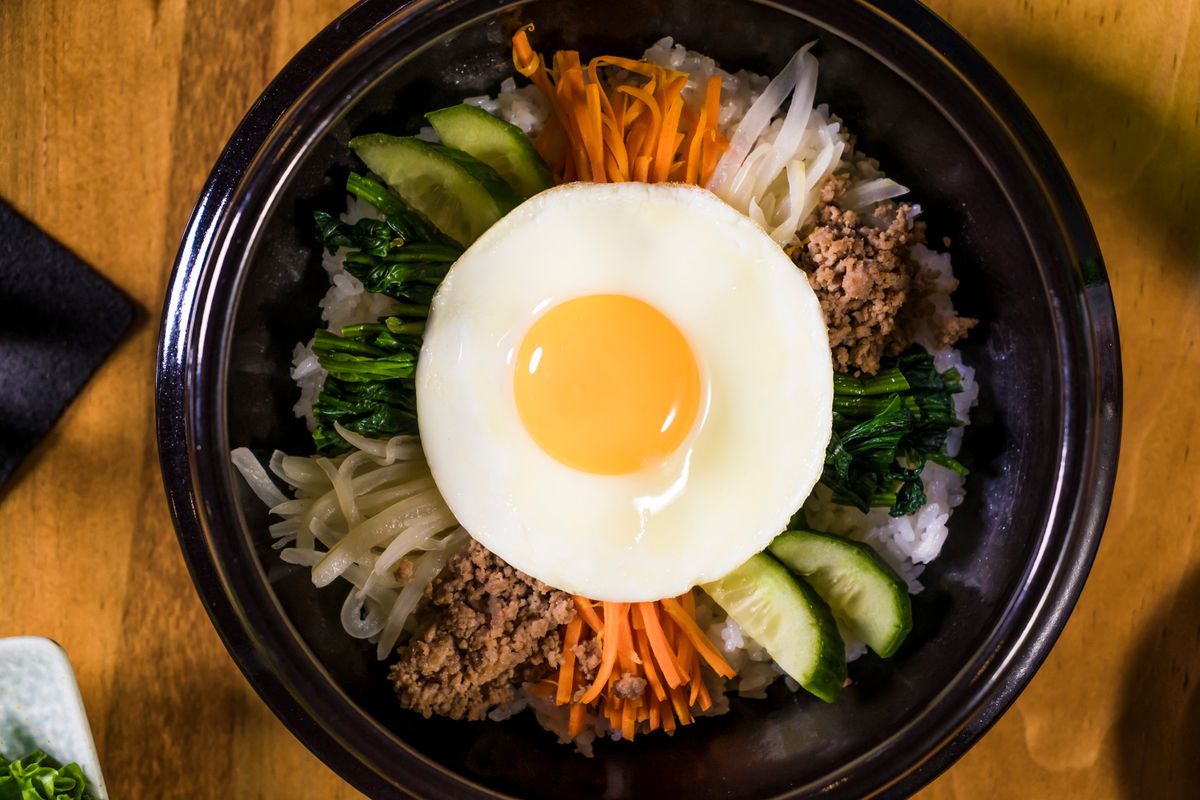
If you only remember one thing, remember this: bibimbap is not high calorie because of the vegetables. It gets calorie-dense when the bowl includes a full rice base, oily beef, a fried egg, and a generous squeeze of gochujang. The good news is that those are easy things to adjust.
In this article
For the broader Korean menu breakdown, start with our full Korean food calorie guide. This article goes deep on just one bowl because bibimbap deserves it.
What is usually in bibimbap
A classic bibimbap bowl usually includes steamed rice, mixed vegetables, a protein such as beef or tofu, an egg, and a sauce based on gochujang. Nutritionally, that is a strong setup: carbs for energy, protein for fullness, vegetables for fiber, and fat for flavor. The issue is not the concept. It is the portion math. And since the rice base is the single biggest calorie driver here, it is worth knowing whether white rice is actually bad for weight loss — the short answer is less alarming than most diet advice suggests.
| Component | Typical portion | Approx. calories |
|---|---|---|
| Cooked white rice | 1 cup | 180 to 220 |
| Mixed namul vegetables | 1 to 1.5 cups | 60 to 120 |
| Beef bulgogi-style topping | 90 to 120g | 170 to 260 |
| Fried egg | 1 egg | 70 to 100 |
| Gochujang | 1 tbsp | 25 to 40 |
| Sesame oil | 1 tsp to 1 tbsp | 40 to 120 |
Realistic calorie ranges by style
Vegetable-forward bibimbap
This is the bowl with a modest rice base, lots of vegetables, leaner protein or tofu, and just a little sauce. It still feels complete because bibimbap already has a built-in mix of textures and flavor.
Restaurant beef bibimbap with egg and sauce
This is the version most people picture. It is still a solid meal, just a bigger one than people assume. Full rice, marinated beef, a fried egg, and free-poured sauce are what push it up.
Dolsot bibimbap with extra oil or cheese
The sizzling stone bowl is delicious because the rice crisps in oil and keeps cooking while you eat. Add extra meat, extra sauce, or cheese and it stops being a medium meal very quickly.
What changes the calorie total most
Bibimbap has a healthy reputation because it should. But if you are trying to log it honestly, these are the pieces that matter most:
- Rice portion: half a cup and one full cup feel similar in a mixed bowl, but the calories are not similar.
- Added oil: sesame oil is tiny by volume and huge by calories.
- Protein choice: tofu or lean chicken will usually land lower than fatty marinated beef.
- Sauce amount: one spoonful is different from coating every bite.
Best lower-calorie swaps if you still want the real thing
Keep these
- All the vegetables
- Kimchi and banchan on the side
- The egg if it makes the meal more satisfying
- A moderate spoon of sauce for flavor
Trim these first
- Ask for less rice or leave a few bites
- Use half the gochujang packet or spoon
- Choose leaner protein or tofu
- Skip extra oil if the bowl already tastes rich
If you want more Korean meals that fit a tighter calorie budget, read our low-calorie Korean recipes guide. If your goal is better meal logging rather than perfect numbers, Coach Ivy works especially well for mixed bowls like this one.
How to log bibimbap in Coach Ivy
Mixed dishes are annoying to log manually because there is no single perfect database entry. A photo-based tracker like Coach Ivy lets you log the whole bowl at once, then adjust with quick notes like “half rice,” “beef bibimbap,” or “light sauce.” That gets you closer than pretending every restaurant bowl is identical.
Frequently asked questions
How many calories are in bibimbap?
A lighter bibimbap usually lands around 400 to 500 calories. A full restaurant beef bibimbap with egg and generous sauce is often closer to 550 to 700 calories.
Is bibimbap healthy?
It can be. Bibimbap combines vegetables, rice, protein, and fermented sides in one bowl. The main things that raise calories are the rice portion, oil, fatty meat, and how much sauce gets mixed in.
Does bibimbap have a lot of protein?
Usually it has a moderate amount, often around 18 to 28 grams depending on the protein portion and whether the bowl includes egg, tofu, beef, or chicken.
What is the easiest way to make bibimbap lower calorie?
Keep the vegetables generous, choose a leaner protein, and use less rice or less sauce. Those three changes do more than removing the egg or overthinking the side dishes.

Log mixed bowls without the spreadsheet headache
Bibimbap is exactly the kind of meal Coach Ivy was made for. Snap the bowl, add a quick note like “half rice” or “extra beef,” and keep moving.
Download Coach Ivy Free