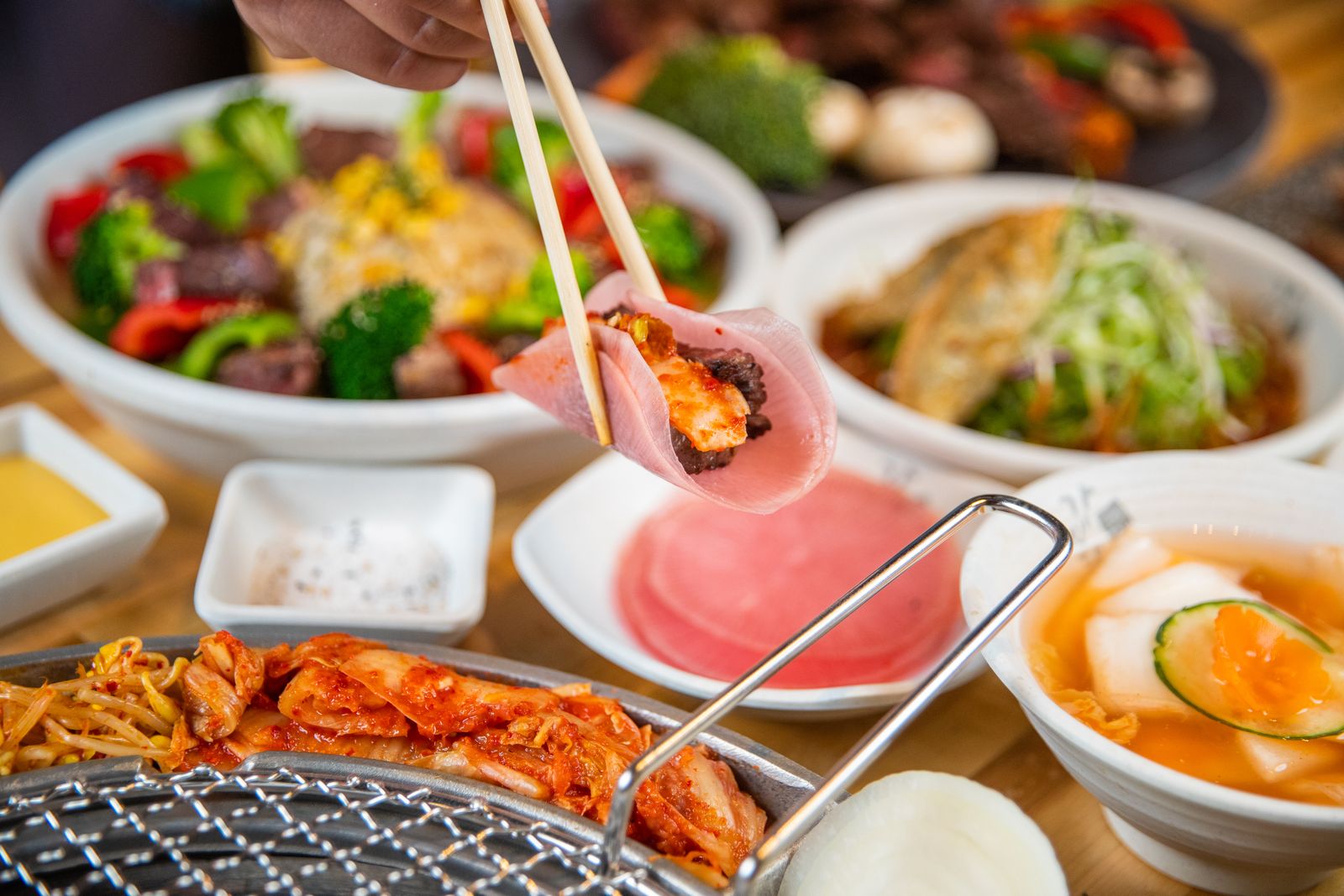
Korean food gets a healthy reputation — and a lot of the time it earns it. But "healthy" and "low calorie" aren't the same thing, and a shared table of BBQ, banchan, and dipping sauces can quietly add up. This guide gives you realistic calorie ranges for the most popular dishes so you can log them without guessing, plus what to order when you're paying attention to the numbers.
In this article
🥢 The Korean food calorie cheat sheet
Calories vary by restaurant and portion, so these are realistic ranges rather than exact numbers. Use them as a starting point and adjust for sauce, oil, and how generous the serving is.
Rice & grains
| Dish | Serving | Approx. calories |
|---|---|---|
| Steamed white rice | 1 cup cooked | 200 kcal |
| Bibimbap (without egg/sauce) | 1 bowl | 400–500 kcal |
| Bibimbap (full, with gochujang) | 1 bowl | 550–700 kcal |
| Kimbap (1 roll, 8 pieces) | Full roll | 300–420 kcal |
| Japchae (glass noodles) | 1 serving | 250–320 kcal |
Proteins
| Dish | Serving | Approx. calories |
|---|---|---|
| Bulgogi (beef) | 150g | 250–320 kcal |
| Samgyeopsal (pork belly, grilled) | 150g | 400–500 kcal |
| Dakgalbi (spicy chicken) | 1 serving | 350–450 kcal |
| Sundubu jjigae (soft tofu stew) | 1 bowl | 200–300 kcal |
| Doenjang jjigae (soybean paste stew) | 1 bowl | 150–250 kcal |
Street food & snacks
| Dish | Serving | Approx. calories |
|---|---|---|
| Tteokbokki (rice cakes in sauce) | 1 serving | 300–400 kcal |
| Korean corn dog (plain) | 1 piece | 300–380 kcal |
| Korean corn dog (with fries coating) | 1 piece | 420–500 kcal |
| Hotteok (sweet pancake) | 1 piece | 180–250 kcal |
| Bingsu (shaved ice, fruit) | Medium | 250–400 kcal |
🌶️ Why Korean food is actually pretty balanced
A traditional Korean meal structure is built around banchan — small side dishes that accompany your main. Instead of one giant plate, you get variety: a little of this, a little of that. That spread naturally delivers a range of vegetables and micronutrients without piling on a huge portion of any single calorie-dense food.
Kimchi alone is almost zero calories (~15 kcal per 100g), packed with probiotics, and adds serious flavor. Most vegetable-based banchan land in the 30–80 calorie range per serving, so they fill out the meal without driving the total up much.
The calorie concern usually isn't the core meal — it's what gets added on top. Dipping sauces, drizzles of sesame oil, extra rounds of meat, and the communal, keep-grilling style of eating are where the numbers climb. The structure is sound; the extras are what you want to keep an eye on.
🔥 What to watch out for
Samgyeopsal nights
Korean BBQ social gatherings can easily total 800–1,200 calories once you factor in pork belly's high fat content, the rice-based wraps, and round after round with multiple sides and sauces. The grill keeps going, and so does the count — it's the communal pacing as much as the food itself.
Tteokbokki
The sauce is mostly gochujang and sugar syrup, so a standard portion delivers 300–400 calories with relatively modest protein. It's delicious, but carb- and sugar-heavy — which makes it better suited as a snack or side than a complete meal.
Korean corn dogs
The fries-coated, cheese-filled versions of the Korean corn dog trend are basically a meal in a stick — despite the handheld, snackable format. Plain runs 300–380 calories; loaded versions push 420–500.
✨ Ivy's Korean food ordering guide (when you're tracking)
None of this is off-limits. The trick is knowing which dishes do a lot for your calorie budget and which ones are worth spending it on intentionally.
Lower-calorie picks
- Doenjang jjigae — filling, low calorie, vegetable-rich
- Sundubu jjigae — soft tofu, high protein-to-calorie ratio
- Samgyetang — ginseng chicken soup, surprisingly light
- Namul banchan — seasoned vegetable sides to stack up
Enjoy mindfully
- Samgyeopsal — worthy of budgeting for
- Bibimbap with full sauce — manageable despite the richness
- Korean corn dogs — snack category, not sides
The real variable: sauces, oil, and the extra rounds
If there's one takeaway, it's that the Korean meal structure isn't the problem — banchan, stews, and fermented sides are some of the most calorie-efficient eating around. What moves the total is the stuff that's easy to forget to log: a spoon of sesame oil here, a generous squeeze of gochujang there, and one more round of pork belly because the grill's still hot.
- 1 tbsp sesame oil = ~120 kcal
- 1 tbsp gochujang = ~30 kcal (and added sugar)
- 1 extra cup of rice = ~200 kcal
- An extra 150g round of samgyeopsal = ~400–500 kcal
Order the stews and vegetable sides freely, spend your budget on the dishes you came for, and just be honest about the add-ons. That's the whole game.
Note what isn't on that list: the rice itself. A standard 공기밥 bowl is around 270 kcal, which is a smaller line item than a single tablespoon of sesame oil plus one extra round of pork belly. Brown rice and white rice have similar calories at equal cooked weight; cup sizes and water content change the comparison. See our cooked rice calorie table for 100g and cup portions.
Tracking Korean meals with an AI calorie tracker
Korean dishes can be tricky to log manually because of the banchan variety and shared plates — there's rarely a single neat "entry" to search for. A photo-based tracker like Coach Ivy lets you snap the spread or describe your portions, and Ivy will estimate what's on the table — banchan, mains, and all. No tedious lookups, no guilt, just a fast estimate you can move on from.
Frequently asked questions
How many calories are in bibimbap?
A bowl of bibimbap without the egg or extra sauce runs about 400–500 calories. With a fried egg and a full squeeze of gochujang, it climbs to roughly 550–700 calories. The rice and the sauce are the main calorie drivers — the vegetables add very little.
How many calories are in Korean BBQ (samgyeopsal)?
Grilled pork belly (samgyeopsal) is about 400–500 calories per 150g because of its high fat content. A full Korean BBQ night — pork belly plus rice-based wraps, banchan, and sauces, eaten communal-style — can easily reach 800–1,200 calories or more.
How many calories are in tteokbokki?
A standard serving of tteokbokki (rice cakes in sauce) is about 300–400 calories. The sauce is mostly gochujang and sugar syrup, so it's carb- and sugar-heavy with relatively little protein — which makes it better suited as a snack than a full meal.
How many calories are in a Korean corn dog?
A plain Korean corn dog is about 300–380 calories. Versions coated in diced fries or stuffed with cheese run higher — roughly 420–500 calories, closer to a full meal than a snack.
Is Korean food healthy when you're tracking calories?
Yes — the traditional Korean meal is built around banchan (small vegetable side dishes) and fermented foods like kimchi, which is almost zero calories at about 15 kcal per 100g. The calories tend to come from added dipping sauces, sesame oil, extra meat portions, and communal-style eating, not the core meal structure.
What are the lowest-calorie Korean dishes to order?
Doenjang jjigae (150–250 kcal), sundubu jjigae (200–300 kcal), samgyetang (ginseng chicken soup), and namul banchan (seasoned vegetable sides) are all filling, vegetable-rich, and high in protein relative to their calories — great choices when you're keeping an eye on the total.

Snap your Korean spread — let Ivy do the math
Banchan, BBQ, shared plates — Coach Ivy reads your meal photo and estimates calories and macros automatically. Free on iPhone.
Download Coach Ivy Free