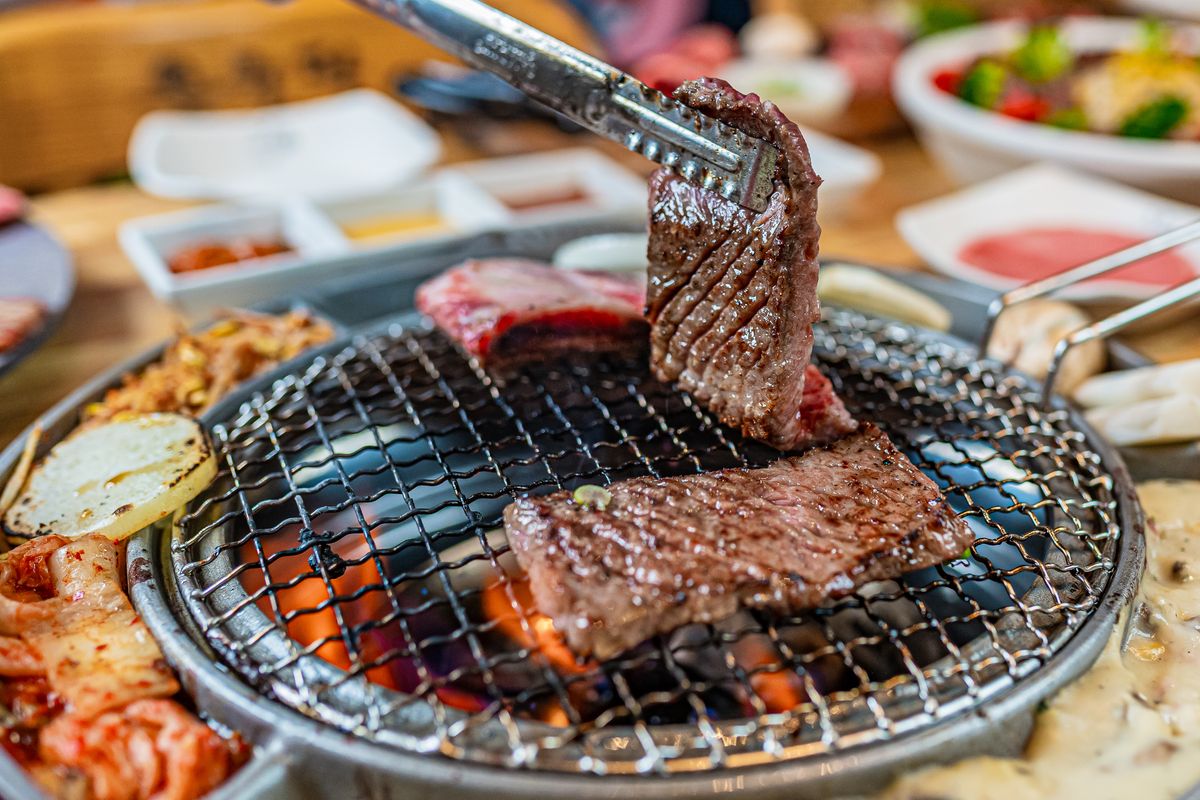
Korean BBQ is one of those meals people underestimate because it arrives as many small pieces instead of one obvious plate. But a little rice here, a little pork belly there, a few spoons of sauce, and suddenly the total looks very different.
In this article
If you want the menu-wide overview first, our Korean food calorie guide covers bibimbap, tteokbokki, stews, and more. This page is for the meal that deserves its own calculator.
Why KBBQ calories climb faster than expected
Korean BBQ is not just “meat calories.” It is a social meal built on repeated bites. Each wrap feels small, but the total includes meat, rice, sauces, sesame oil, side dishes, and usually more meat than you think you ate. That is why two people can describe the same KBBQ dinner and be hundreds of calories apart.
Calories by common Korean BBQ meat cut
| Meat | Typical serving | Approx. calories |
|---|---|---|
| Samgyeopsal (pork belly) | 150g grilled | 400 to 500 |
| Bulgogi beef | 150g cooked | 250 to 320 |
| Galbi / marinated short rib | 150g cooked | 320 to 420 |
| Chicken thigh | 150g cooked | 220 to 300 |
| Lean beef cuts | 150g cooked | 220 to 300 |
One round of pork belly is already a lot
Samgyeopsal is delicious because it is rich. That richness is mostly fat, which means the calories rise fast even before rice or sauce enters the picture.
Rice, wraps, sauces, and side dishes
This is where the total really gets personal. A lettuce wrap itself is basically nothing. The issue is what gets tucked into it.
| Add-on | Typical portion | Approx. calories |
|---|---|---|
| Steamed rice | 1 cup | 180 to 220 |
| Ssamjang | 1 tbsp | 35 to 50 |
| Sesame oil dip | 1 tbsp | 120 |
| Kimchi / vegetable banchan | small side portion | 10 to 60 |
| Lettuce wraps | 3 to 4 leaves | 10 to 20 |
That is why vegetable-based banchan are not the main problem. In most cases, the true calorie jump comes from fatty cuts, extra rice, and sauces that get poured casually because they feel like “just condiments.”
How to order Korean BBQ lighter without ruining the experience
Do more of this
- Mix fattier cuts with leaner ones
- Build more lettuce wraps
- Use banchan to stretch the meal
- Keep one intentional serving of rice instead of grazing on refills
Watch this closely
- Pork belly as the only meat
- Rice plus noodles plus wraps in one meal
- Repeated dips into sesame oil
- The “one more plate” effect
What most restaurant meals land around
If you had a mix of meat, some rice, some sauces, a few wraps, and did not stop after the first round, this is the most honest range for many restaurant KBBQ meals.
For another easy Korean-food win, read our bibimbap nutrition guide. If you want a snackier dish instead, we also broke down tteokbokki nutrition facts.
How to log Korean BBQ in Coach Ivy
Shared plates are exactly where manual logging falls apart. With Coach Ivy, you can log the spread from a photo and add a quick note like “mostly pork belly,” “one rice,” or “light sauce.” That is a better fit than pretending the meal had one neat barcode-style answer.
Frequently asked questions
How many calories is Korean BBQ?
A lighter Korean BBQ meal can be around 500 to 700 calories. A typical restaurant meal often lands around 700 to 1,000 calories, and pork belly-heavy nights can pass 1,200 calories.
What is the highest-calorie meat at KBBQ?
Samgyeopsal, or pork belly, is usually one of the highest-calorie choices because it is significantly fattier than leaner cuts.
Are Korean BBQ side dishes high calorie?
Many vegetable-based sides are relatively light. The bigger calorie additions usually come from meat, rice, oil, and sauces, not the kimchi or greens.
What is the easiest way to make KBBQ lighter?
Choose some leaner cuts, keep rice moderate, and use sauces intentionally instead of automatically. You still get the full experience, just with fewer “invisible” calories.

Shared plates are hard. Ivy makes them less annoying.
Snap the grill, add a note like “mostly pork belly” or “one bowl of rice,” and let Coach Ivy estimate the meal without turning dinner into homework.
Download Coach Ivy Free